Vinicunca Mountain vs. Pallay Punchu: Which Is the Best Rainbow Mountain in Cusco to Visit in 2026?
Cusco continues to amaze travelers from around the world with landscapes that seem straight out of another planet. While Machu Picchu remains Peru’s most iconic destination, the region’s colorful mountains have become some of South America’s most sought-after attractions.
The breathtaking Vinicunca, also known as the Rainbow Mountain, paved the way for high-altitude adventure tourism and quickly went viral across social media thanks to its extraordinary natural colors. However, a new competitor has recently emerged, capturing the attention of travelers, hikers, and photographers worldwide: Pallay Punchu in the district of Layo.
Both mountains offer spectacular scenery, challenging hikes, and unforgettable experiences. But the question many visitors ask before traveling to Cusco is: Which Rainbow Mountain is actually worth visiting?
In this comprehensive guide, we compare Vinicunca and Pallay Punchu in terms of difficulty, scenery, altitude, accessibility, climate, photography opportunities, tourism levels, and overall experience to help you choose the best option for your travel style.
Why Are Cusco’s Rainbow Mountains So Famous?
Peru’s Rainbow Mountains are natural geological formations created over millions of years through the accumulation and oxidation of minerals. Their vibrant shades of red, green, yellow, white, and turquoise come from mineral deposits such as iron, copper, sulfur, and calcium carbonate.
Beyond their visual appeal, these mountains are surrounded by snow-capped peaks, high-altitude valleys, crystal-clear lakes, and traditional Andean communities that continue to preserve their ancestral culture.
Today, visiting a Rainbow Mountain has become one of the most popular excursions for travelers exploring Cusco after visiting Machu Picchu.
Vinicunca: Peru’s Most Famous Rainbow Mountain
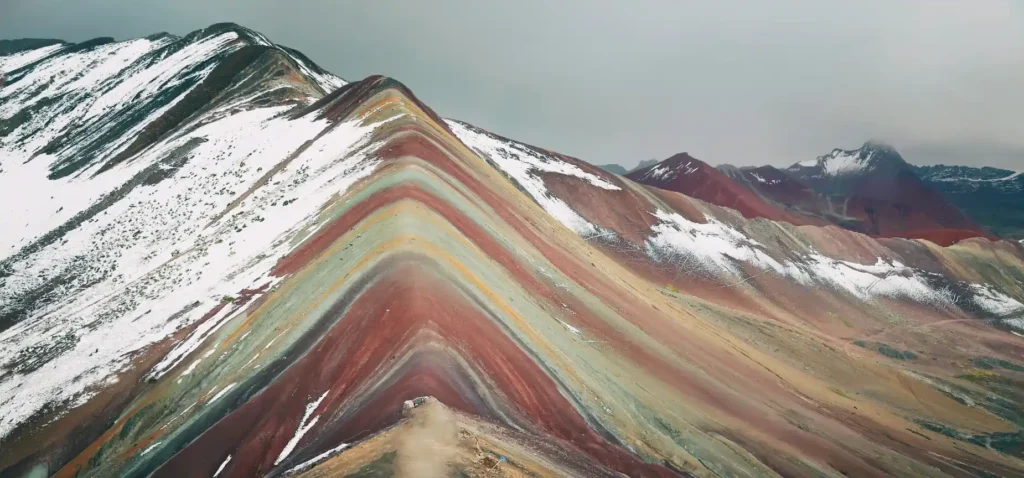
Located at more than 5,200 meters (17,060 feet) above sea level, Vinicunca, also known as Rainbow Mountain or the Mountain of Seven Colors, is Cusco’s most famous adventure destination after Machu Picchu.
Its popularity exploded thanks to Instagram and travel influencers, quickly becoming one of the most photographed landscapes on Earth.
Where Is Vinicunca Located?
Vinicunca is situated within the Vilcanota Mountain Range, south of Cusco, approximately 3.5 hours by vehicle from the city.
Most tours depart very early in the morning and include transportation, breakfast, and lunch.
What Is the Hike to Vinicunca Like?
The traditional hike to Vinicunca takes between 1.5 and 2 hours, depending on your physical condition. While the trail itself is not technically difficult, the real challenge comes from the extreme altitude.
At more than 5,000 meters above sea level, even walking slowly can cause fatigue, shortness of breath, and symptoms of altitude sickness.
Highlights of Visiting Vinicunca
- World-famous landscape
- The iconic Rainbow Mountain photo opportunity
- Large selection of affordable tours
- Well-organized and clearly marked trails
- Horse rentals available
- Perfect for first-time visitors to Cusco
Drawbacks of Vinicunca
The biggest downside of Vinicunca is overtourism. During peak season, especially from June through August, thousands of visitors arrive every day.
This often leads to crowded viewpoints, long waits for photos, and a less intimate connection with nature.
Pallay Punchu: Cusco’s Hidden Gem
While Vinicunca dominates social media, Pallay Punchu has emerged as a much more authentic and less crowded alternative.
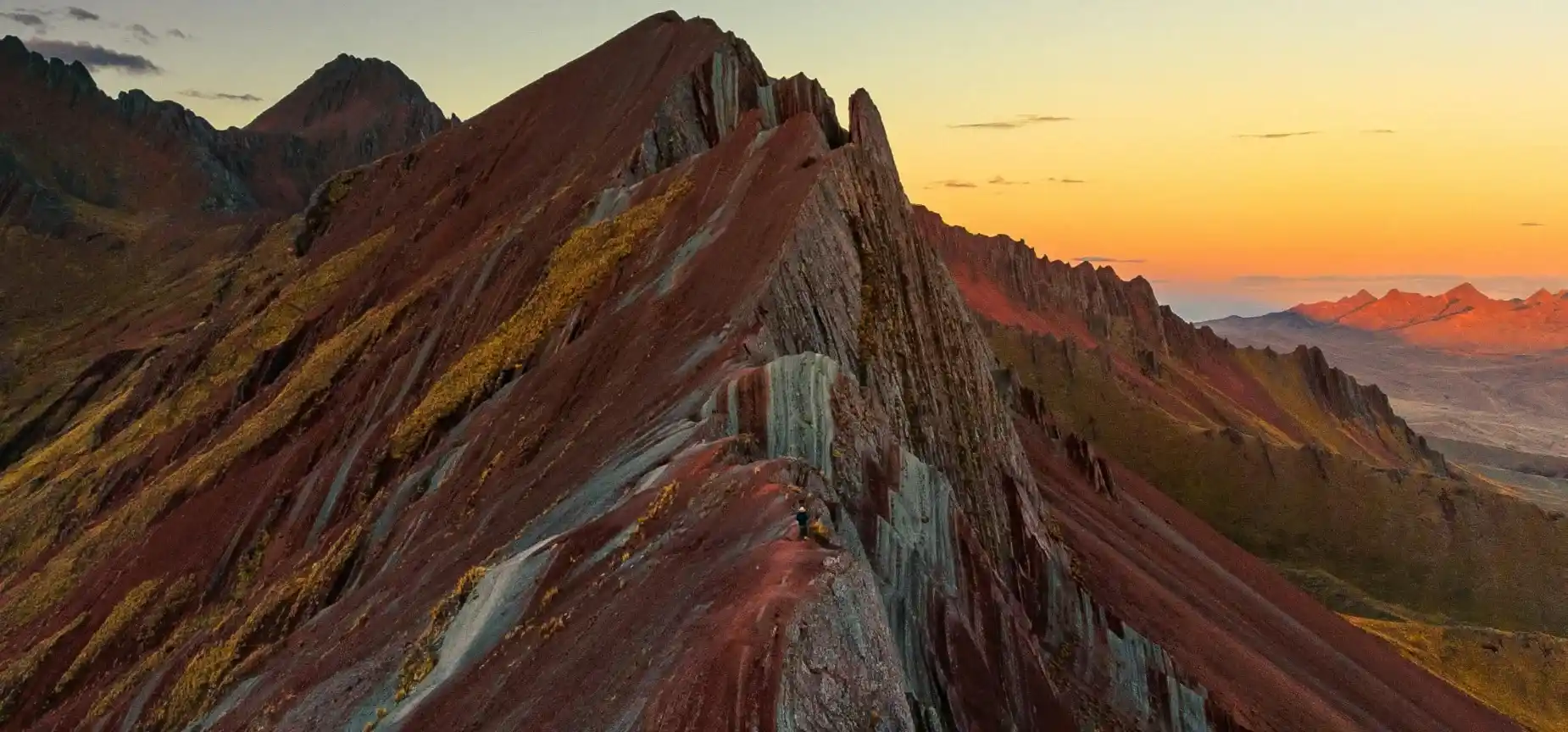
Located in the district of Layo, in the province of Canas, this mountain stands out because of its dramatic pointed rock formations that resemble the geometric patterns found in traditional Andean ponchos.
Its name, “Pallay Punchu,” roughly translates to “woven poncho,” referring to its colorful striped appearance.
What Makes Pallay Punchu Special?
Unlike Vinicunca, Pallay Punchu offers a quieter, more mystical, and nature-focused experience. As an emerging destination, it still receives only a fraction of the visitors who travel to Rainbow Mountain.
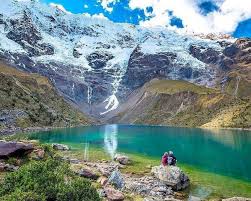
One of its greatest attractions is the stunning panoramic view of Langui-Layo Lake, whose deep blue waters create a spectacular contrast against the colorful mountain ridges.
What Is the Hike to Pallay Punchu Like?
The hike to Pallay Punchu is generally shorter than the hike to Vinicunca, although it still involves steep ascents.
Many travelers consider the experience more enjoyable due to the smaller crowds and the peaceful atmosphere.
Highlights of Visiting Pallay Punchu
- Far fewer tourists
- Unique and dramatic landscapes
- Panoramic views of Langui-Layo Lake
- More authentic travel experience
- Outstanding nature photography opportunities
- Ideal for adventurous travelers
Drawbacks of Pallay Punchu
The main challenge is accessibility. The drive from Cusco can take between 4 and 5 hours, depending on road conditions and route selection.
In addition, fewer tour operators offer daily departures, so some visitors choose private transportation or specialized adventure tours.
Vinicunca vs. Pallay Punchu: Complete Comparison
| Feature | Vinicunca | Pallay Punchu |
|---|---|---|
| Altitude | 5,200 m (17,060 ft) | 4,700 m (15,420 ft) |
| Difficulty | Moderate to High | Moderate |
| Tourist Crowds | Very High | Low |
| Landscape | Classic rainbow mountain | Sharp ridges + lake views |
| Accessibility | Very Easy | More Limited |
| Best For | First-time visitors | Adventure travelers |
Which Mountain Is Better for Photography?
If your goal is to capture the iconic viral Rainbow Mountain photo, Vinicunca remains the top choice.
However, if you’re searching for more dramatic compositions, unique scenery, and landscapes that haven’t already flooded social media, Pallay Punchu offers extraordinary photographic opportunities thanks to its sharp ridges and stunning lake backdrop.
Many professional photographers actually prefer Pallay Punchu because it still feels untouched and less affected by mass tourism.
Which Hike Is More Physically Demanding?
Although both mountains require physical effort, Vinicunca is generally considered more challenging due to its higher elevation.
At more than 5,200 meters above sea level, oxygen levels are significantly lower, making even short walks feel exhausting.
Pallay Punchu also requires hiking uphill, but because it sits at a slightly lower altitude, most travelers find it somewhat easier.
Important Tips Before Visiting a Rainbow Mountain
1. Acclimatize in Cusco
Spend at least two days in Cusco before attempting either hike.
2. Bring Proper Clothing
Weather conditions in the Andes can change rapidly. Make sure to pack:
- Waterproof jacket
- Gloves
- Warm hat
- Sunscreen
- Sunglasses
- Hiking shoes
3. Stay Hydrated
Drinking plenty of water helps your body adapt to high altitudes.
4. Drink Coca Tea or Muña Tea
These traditional Andean herbal infusions can help relieve altitude sickness symptoms and improve acclimatization.
Is It Worth Visiting Both Mountains?
Absolutely.
Although both destinations are classified as Rainbow Mountains, they provide completely different experiences.
Vinicunca represents the classic must-see attraction in Cusco: famous, accessible, and spectacular. Pallay Punchu, on the other hand, offers a more exclusive, adventurous, and off-the-beaten-path experience.
Many travelers returning to Cusco for a second visit choose Pallay Punchu specifically because they want to avoid crowds and discover a more authentic side of the Andes.
Conclusion: Vinicunca or Pallay Punchu?
Choosing between Vinicunca and Pallay Punchu ultimately depends on the type of experience you’re seeking during your trip to Cusco.
If it’s your first time in Peru, you want to see the world’s most famous Rainbow Mountain, and you prefer organized, budget-friendly tours, Vinicunca is an excellent choice.
On the other hand, if you value adventure, tranquility, unique scenery, and fewer crowds, Pallay Punchu may become one of the most memorable highlights of your journey.
Whichever destination you choose, both mountains showcase the extraordinary beauty of the Peruvian Andes and demonstrate why Cusco remains one of the most breathtaking travel destinations on Earth.