Uros Islands Perú 2027 — What They Are and How to Visit the Floating Islands of Lake Titicaca
Imagine living on an island made entirely of plants — one that floats, moves with the wind, and is renewed layer by layer by your family over generations. That is exactly what life is like on the Uros Islands, one of the most unique attractions on Lake Titicaca and throughout Peru.
This guide explains what the Uros Islands really are, how they are built, what you can expect during a visit, and how to make the most of this one-of-a-kind experience.
What Are the Uros Islands?
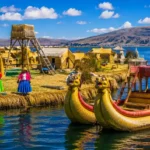
The Uros Islands are a group of more than 60 artificial islands made entirely from totora reeds — an aquatic plant similar to bulrushes that grows abundantly in the shallow waters of Lake Titicaca. These are not natural islands; they are human-made floating platforms anchored to the lakebed with ropes to prevent them from drifting with the wind.
The Uros people, an Indigenous community with a long history in the region, have lived on these islands for generations. According to local tradition, their ancestors moved onto the lake to escape conflicts with other highland communities. Over time, they developed a way of life closely connected to totora reeds: their homes, boats, fuel, and even part of their traditional diet are linked to this versatile plant.
How the Uros Floating Islands Are Built
The construction process is fascinating and continues to rely on traditional techniques passed down through generations:
- 🌱 The foundation: Large blocks of intertwined totora roots, known locally as “khili,” are cut and assembled. These naturally buoyant blocks form a solid base that can be up to 1–2 meters thick.
- 🪢 Anchoring the island: The blocks are tied together and secured to the lakebed with stakes and ropes to help keep the island in place.
- 🌾 The surface: Freshly cut totora reeds are placed in successive layers over the root foundation, creating the surface on which people walk and build their homes.
- 🔄 Ongoing maintenance: The surface reeds gradually decompose because of the moisture, so families regularly add new layers — often every 10–15 days, depending on conditions. Walking across the island feels a little like stepping onto a soft, slightly springy mattress.
- 🏠 Buildings and everyday objects: Homes, lookout towers, traditional reed boats, and even some household items are also made from totora reeds.
💡 Did you know? Some Uros families also eat parts of the totora plant. The tender, white base of the stem can be eaten raw and has a crisp texture similar to celery. The plant has traditionally been an important part of local life, although its nutritional value and dietary role can vary.
What to Expect When Visiting the Uros Islands
- 🛶 Boat ride to the islands: The journey from the port of Puno typically takes around 20–30 minutes by tourist boat, depending on the departure point and conditions.
- 👋 A warm community welcome: Uros families welcome visitors and explain their history, how the islands are built, and what daily life is like. Presentations may be given in Spanish and local languages, depending on the host community.
- 🏘️ Walking around the island: Walking on the totora surface is an experience in itself. The ground feels soft and slightly springy under your feet.
- 🛍️ Local handicrafts: Families sell textiles, miniature reed boats, and handmade souvenirs. Buying directly from local artisans is one way to support the community economy.
- 🚣 Optional traditional reed boat ride: Some islands offer short rides on traditional boats made from totora reeds, often for an additional fee.
- ⏱️ Duration: A visit to the Uros Islands generally lasts around 1–1.5 hours and is often the first stop on a longer tour to Taquile or Amantaní.
Visiting the Uros Islands as Part of a Longer Tour
Visiting the Uros Islands alone generally takes around 3 hours, including the boat ride, island visit, and return to Puno. For this reason, many travelers combine the experience with other islands on a full-day tour or a two-day trip:
- 🏝️ Uros + Taquile Island (1 day): The most popular combination — visit the floating islands in the morning and explore Taquile, known for its traditional textile arts, in the afternoon, usually with lunch included.
- 🏝️ Uros + Amantaní Island (1–2 days): Combine a visit to the floating islands with an overnight homestay and an opportunity to experience local life with a host family.
- 🏝️ Uros + Amantaní + Taquile (2 days): A more comprehensive journey through Lake Titicaca, combining floating islands, local traditions, and island landscapes.
👉 Explore our complete Lake Titicaca guide and discover its islands →
Tips for Visiting the Uros Islands
- 🧥 Dress in warm layers: Winds across the lake can make it feel much colder than expected, even on sunny days.
- 💵 Bring small-denomination Peruvian soles: Cash is useful when purchasing handicrafts directly from local families.
- 📷 Ask before taking photographs: Requesting permission before photographing people is a simple way to show respect for the families hosting you.
- 🛶 Allow extra cash for a traditional reed boat ride: These rides may cost extra, so bring a little additional cash if you would like to try one.
- 🌞 Use sunscreen: Sunlight reflecting off the lake can increase UV exposure, especially at this high altitude.
Frequently Asked Questions
Do the Uros Islands really float?
Yes. The islands are built on buoyant blocks of totora roots that float naturally on the water. They are anchored to the lakebed with ropes to keep them from drifting freely, but the islands themselves rest on the water rather than on the lake bottom.
How many people live on the Uros Islands?
The population varies from island to island. Some are home to just a few families, while others have larger communities and facilities such as schools. The Uros communities of Lake Titicaca are spread across numerous floating islands, and population figures vary by source and over time.
Is it worth visiting the Uros Islands without visiting another island?
Yes. The Uros Islands offer a fascinating cultural experience and can be visited in a relatively short amount of time. However, many travelers choose to combine the visit with Taquile or Amantaní for a broader understanding of the cultural diversity around Lake Titicaca. Each island offers a different experience, from the construction of floating reed islands to traditional textiles and community-based tourism.
Ready to Visit the Uros Islands?
1-day and 2-day tours · Combine Uros with Taquile and Amantaní
Daily departures from Puno · Bilingual guide included
Explore Lake Titicaca Tours →
Read the Complete Lake Titicaca Guide →