🏛️ Sacsayhuaman (Quechua for “Satisfied Falcon”)
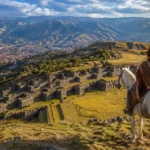
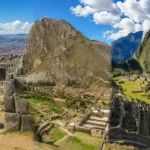
A masterpiece of Inca architecture, Sacsayhuaman is a set of megalithic ruins perched on a hill overlooking northern Cusco. Spanish chroniclers initially believed it served military purposes, later religious ones, and eventually as a labor site.
The walls are made of massive stone blocks, some reaching 9 meters in height, 5 meters in width, and 4 meters in thickness. The largest is estimated to weigh 125 tons. These stones were fitted together perfectly without mortar.
The main wall consists of three zigzagging layers, with the second and third stacked above the first. The platforms average 360 meters in length and are connected by staircases and access gates. The Inca’s throne is surrounded by rocks facing the walls and the Rodadero, located on the same plateau.
Sacsayhuaman was the site of major historical events, especially during the Spanish conquest. Today, it hosts the annual Inti Raymi celebration.
Located just 4 km north of Cusco, the Sacsayhuaman Archaeological Park spans approximately 3,000 hectares. It features rich Andean flora and extraordinary Inca and pre-Inca monuments including Sacsayhuaman, Kencco (Qenqo), Puca Pucara, and Tambomachay.
Opening hours: Monday to Sunday and holidays, 7:00 a.m. to 6:00 p.m.
Note: Some sites require a paid entrance check the tourist ticket options.
🐾 Kencco (Qenqo)
A sanctuary dedicated to animal worship, Kencco features zigzagging stairways carved into rock. Its main structure resembles a circular amphitheater with 19 niches that may have served as seats.
A massive 5.9-meter stone shaped like a puma supports the theory of ritual use. The site includes a labyrinth-like entrance leading to underground galleries, passageways, channels, and staircases with ancient carvings, many depicting pumas.
Kencco is located 4 km from Cusco’s Plaza de Armas, along the road to Sacsayhuaman.
🛡️ Puca Pucara
This hilltop Inca site served as a military outpost and administrative center. Due to its proximity to Tambomachay, it likely played a role in defense and in controlling the route to Calca, which led to the Antisuyo region.
The fortification includes terraces, stairways, passageways, towers, niches, and a circular wall enclosing the entire structure. It is located 7 km from Cusco’s Plaza de Armas.
💧 Tambomachay
Known as the “Baths of the Inca,” Tambomachay was a sanctuary dedicated to water worship and reserved for the Inca elite. It showcases refined stonework and advanced hydraulic engineering.
The site features interconnected walls and staircases with spring-fed channels flowing into pools. The most striking water feature cascades from the second terrace into a small basin below.
Niches measuring 2 meters in height were used by the Inca and his court to perform water rituals honoring Inti, the Sun God. Tambomachay is located 8 km from Cusco’s Plaza de Armas.
🐍 Laqo, Lanlakuyoq, and Cusilluchayoq
These pre-Hispanic worship sites are located 5 km east of Cusco. Rock carvings depict felines, monkeys, and serpents. The area is especially intriguing for followers of spiritual and esoteric traditions.