Intihuatana of Machu Picchu: The Enigma of the Inca Solar Clock
An ancient stone that continues to challenge science
Imagine a sundial without gears or hands, capable of predicting the solstices with astonishing accuracy. Now, imagine this instrument was carved more than 500 years ago and is hidden atop one of the wonders of the world. We’re talking about the Intihuatana at Machu Picchu, a sacred stone that continues to fascinate archaeologists, astronomers, and travelers alike.
Some believe it was a sophisticated Inca astronomical observatory , while others see it as a ceremonial altarused in sacred rituals. But what is the true purpose of the Intihuatana?

What does “Intihuatana” mean?
The term Intihuatana comes from the Quechua words “inti” (sun) and (to tie), which translates as “the place where the sun is tied.” Although explorer Hiram Bingham popularized the name, it is not known for certain whether this was its original name.
This mysterious stone appears to have been more than just a tool or symbol. Its connection to the stars and the sacred mountains of the Inca Empire makes it an object of profound spiritual and astronomical significance.
Where is the Intihuatana located?
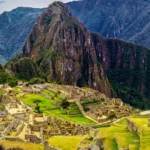
The Intihuatana is located at the highest point of the area known as the Sacred Space of Machu Picchu, northeast of the Main Plaza and near the Temple of the Three Windows. This elevated hill juts out into the landscape and is surrounded by ceremonial enclosures and terraces, further highlighting its importance within the archaeological complex.
What was the function of the Intihuatana?
Although its original purpose is still debated, there are several theories:

Astronomical observatory
Many experts suggest that the Intihuatana functioned as an Inca sundial. The shadows cast by its column vary throughout the day, and may have been used to mark the solstices, especially the winter solstices in June, which were key to organizing the Inca agricultural calendar.
Altar ceremonial
Other researchers, such as archaeologist Federico Kauffman Doig, suggest that the Intihuatana had a more spiritual purpose. It was associated with the Apus(sacred mountains) and was the center of rituals intended to ask for protection, good harvests, and prevent natural disasters. This theory is supported by chronicles such as those of Guamán Poma de Ayala, who drew similar figures called Intihuatana idols in ritual contexts.
A dual function: science and spirituality
The Intihuatana most likely had a dual function: astronomical and ceremonial. The Incas did not separate the scientific from the spiritual, and this stone may have been a tool for understanding the cosmos and, at the same time, a bridge between the earthly and spiritual worlds.
Sacred alignments of the Intihuatana
One of the most intriguing aspects of the Intihuatana is its precise alignment with the cardinal points and the surrounding mountains, considered sacred by the Incas:
- Snowy Salkantay
- East: Nevado Verónica (where the sun rises during the equinoxes)
- North: Huayna Picchu
- West: Pumasillo Mountain Range (where the sun sets on the summer solstice)
These alignments reinforce the hypothesis that the Intihuatana was designed with an astronomical and symbolic purpose , being a unique observation point from where the course of the sun could be followed throughout the year.
Was the Intihuatana a sundial or a shrine?
The legend of the Intihuatana as an instrument for “binding the sun” has roots in ancient myths collected in the Apurímac region and in the Inkarri story. These stories spoke of lengthening the days to allow more time for agricultural work. Although it may sound mythical, these ideas reflect the Inca vision of an integrated universe, where astronomy served spirituality and daily life.

The perfect construction of a mystical structure
The Intihuatana at Machu Picchu is one of the most iconic and mysterious structures in the Inca world. This majestic piece of engineering was carved directly from a single piece of granite rock. Without the use of modern tools, the Incas created a masterpiece approximately 1.70 meters high and 8.60 meters in circumference . The most astonishing thing is that it was carved in the same place where it stands, demonstrating the incredible mastery of Inca architecture.
Design and shape of the Intihuatana
The Intihuatana has a shape reminiscent of a small pyramid with right angles. Its central, column-like protuberance is a key feature that many interpret as a device for “binding the sun.” The structure also features several levels or platforms, a seat-like base, and a rectangular surface on top, suggesting a possible ceremonial use.
An intriguing detail is its 13-degreetilt , which makes its design even more interesting. The precision with which it was carved is remarkable: each side has perfect angles and a flawless finish. Some experts suggest that the shape of the Intihuatana could have been inspired by the silhouette of a mountain, specifically Huayna Picchu, although the exactness of its angles raises the question: why did the Incas decide to use such precise geometry?
The spiritual connection with nature
For the Incas, geometric perfection reflected not only their architectural skill, but also their deep spiritual connection with nature. Like other sacred structures in Pisac, Sacsayhuamán, Tipón, and Cusco, the Intihuatana features stepped forms, characteristic of huacas (ceremonial sites dedicated to Pachamama). This reinforces the idea that its purpose was not only astronomical, but also ritual and spiritual.
Alignment with the cardinal points
One of the most fascinating features of the Intihuatana is its alignment with the cardinal points, specifically with the sacred mountains surrounding Machu Picchu. To appreciate its magnificence, we suggest you take a 360-degree turn around the stone, observing how it aligns with nature and the cosmos.
How to Visit the Intihuatana of Machu Picchu
If you want to explore the Intihuatana up close, you’ll need to purchase a ticket for Machu Picchu Circuit 2. This circuit will take you through the site’s most significant structures, including:
- The Temple of the Sun
- The Sacred Rock
- The Water Mirrors
- The Temple of the Condor
And of course, you’ll enjoy the classic panoramic view of Machu Picchu.
Getting to the Intihuatana
Once you reach Machu Picchu, you just need to follow the circuit. The Intihuatana is located beyond the Three Windows Complex and is accessible by climbing some steps.
Visiting Hours
Machu Picchu is open from 6:00 am to 5:00 pm , but access to Intihuatana is limited, generally available between 7:00 am and 10:00 am. If you prefer to enjoy it with fewer people, we recommend arriving early.
Important recommendation
Although you can get quite close, touching the stone is not permitted, as the Intihuatana is considered a monument of great historical and cultural value. It is crucial to respect the regulations to preserve this heritage.
The Unknown Intihuatana: A Second Mystery at Machu Picchu
Although most visitors to Machu Picchu are familiar with the main Intihuatana , few know that there is a second Intihuatana nearby, almost unknown even to locals.
This enigmatic hidden Intihuatana is located at km 122 of the railway line that connects Aguas Calientes with Hidroeléctrica. Surrounded by dense vegetation and within private property, this second Intihuatana is isolated and virtually unexplored, adding even more mystery to the history of Machu Picchu
Conclusion: An Enigma That Continues to Reveal Secrets
The Intihuatana at Machu Picchu remains one of the most fascinating and mysterious wonders of the Inca civilization. Its construction, astronomical alignment, and ceremonial purpose continue to challenge archaeologists and scientists, while its connection to the sacred mountains and the cosmos remains a source of wonder.
Would you like to learn more about the hidden secrets of Machu Picchu? Don’t stop exploring this incredible destination, which reveals new mysteries every time.