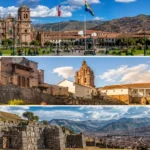
Sacsayhuamán Cusco guide — Complete Guide 2026
Sacsayhuamán is the largest Inca fortress in Peru and, for many travelers who visit it, the most breathtaking experience of their entire trip — even more so than Machu Picchu. Just 20 minutes from central Cusco, this monumental construction with stone blocks weighing up to 125 tons is one of the most extraordinary testaments to human engineering in history.
In this guide we cover everything you need to know to visit Sacsayhuamán in 2026: its history, what to see, how to get there, ticket prices, and the most special way to experience it — on horseback with panoramic views over the entire city of Cusco.
What Is Sacsayhuamán — History and Significance
The name Sacsayhuamán comes from Quechua and is pronounced “saksaywaman.” Its exact meaning is debated — the most widely accepted translations are “satisfied falcon” or “place where the hawk is satiated,” though some researchers propose “place where the hawk is tied.”
Construction of Sacsayhuamán began during the reign of Inca Pachacútec (15th century) and continued under his successors for approximately 70 years. According to colonial chronicles, over 20,000 workers participated in its construction under the Inca communal labor system known as mita.
It was not originally just a military fortress — modern archaeologists believe it was primarily a large ceremonial compound where the Empire’s most important festivals took place, especially the Inti Raymi (Festival of the Sun). The purely military interpretation came from Spanish chroniclers who called it a “fortress” upon observing its imposing walls.
The Stones of Sacsayhuamán — The Greatest Mystery of Inca Architecture
What impresses visitors most — and generates the most questions — are the stone blocks. The zigzag walls are built from enormous blocks of limestone and andesite:
- 🪨 The largest known block stands 28 feet (8.5m) tall, 13 feet (4m) wide and weighs approximately 125 tons — equivalent to the weight of 20 African elephants
- 🪨 The blocks are fitted without mortar, with millimetric precision — not even a sheet of paper fits between the joints
- 🪨 The nearest quarries from which the rock originates are over 12 miles (20 km) away, at Waqoto and Rumiqolqa
- 🪨 The walls have three terraced levels in a zigzag pattern stretching over 300 meters in total length
How the Incas transported and assembled these blocks without wheels, iron, or draft animals capable of pulling such weight remains one of the great unsolved mysteries of world archaeology. Theories range from earthen ramps to lever and roller systems — but none fully answers the question.
💡 The fact that surprises everyone: The earthquakes of 1650 and 1950 — two of the most destructive in Cusco’s history — severely damaged the city’s Spanish colonial buildings. But not a single wall of Sacsayhuamán shifted by a millimeter. Inca anti-seismic engineering is still studied at architecture universities around the world.
What to See at Sacsayhuamán fortress — The 5 Main Sectors
1. The Zigzag Walls
The most iconic and impressive element. Three terraced zigzag walls stretch for over 300 meters with their colossal perfectly fitted blocks. Take time to walk the entire length — each angle reveals a different perspective on the scale of the construction.
2. The Central Esplanade (Rayan Pampa)
The flat open space in front of the walls where the Inca Empire’s great ceremonies were held. Today it’s the stage of the Inti Raymi every June 24 — the Festival of the Sun, the most important Inca celebration in Cusco.
3. The Inca’s Throne (Suchuna)
A natural rock formation carved into ceremonial seats and stairways. Inca legend holds that rulers observed ceremonies from here. From Suchuna you have a complete panoramic view of the walls and the entire city of Cusco spread out below.
4. Rodadero
A natural rock with a smooth, polished surface that children (and many adults) use as a natural slide. The Incas likely used it for ceremonial purposes. Today it’s one of the most photogenic points in the complex.
5. Chincana Grande
A labyrinth of tunnels and underground passages that extend beneath the archaeological complex. Part of Chincana is not open to the public for safety reasons, but the accessible sections are fascinating to explore.
Inti Raymi at Sacsayhuamán — The Biggest Inca Celebration of the Year
The Inti Raymi (Festival of the Sun) takes place every June 24 — the winter solstice in the Southern Hemisphere, the shortest day of the Andean year. It is the most important Inca celebration still held in Peru and one of the most spectacular events in all of South America.
The festival unfolds across three main stages throughout the day:
- 🌅 Morning (9:00 AM): Qorikancha — ceremony begins with the Inca and his priests
- 🏛️ Midday (12:00 PM): Plaza de Armas — procession through the historic center
- 🌞 Afternoon (3:00–6:00 PM): Sacsayhuamán — the central act, with over 500 performers in historical costume recreating the sacred fire ritual
If your Cusco visit falls on June 24, the Inti Raymi at Sacsayhuamán is an unmissable experience. Grandstand tickets for the central act sell out weeks in advance — check availability with your agency.
How to Get to Sacsayhuamán from Cusco
- 🚕 Taxi from the center: the most practical option. Approximately S/10–15 (10–15 minutes). Ask your hotel to call a trusted taxi.
- 🚶 On foot from the Plaza de Armas: about 45 minutes uphill through the San Blas neighborhood. Demanding at 11,150 ft altitude but with beautiful views along the way. Only recommended if you’re already well acclimatized.
- 🏍️ Moto-taxi: available from certain parts of the center, budget-friendly but less recommended for tourists with luggage.
- 🐴 On horseback: the most special and memorable option. See below.
The Most Special Way to Visit Sacsayhuamán — On Horseback
If you’re looking for an experience that goes beyond the standard visit, the Horseback Riding Tour at Sacsayhuamán is one of the most unique and memorable activities in Cusco. Exploring the surroundings of the Inca fortress on horseback — with the monumental walls as your backdrop and panoramic views of all of Cusco at your feet — is a completely different experience from any bus tour.
The tour includes:
- 🐴 Horse with saddle and expert riding guide throughout the entire route
- 🏔️ Route around the Sacsayhuamán surroundings with stops at the best Cusco viewpoints
- 🚗 Transport included to and from your Cusco hotel
- ⏱️ Duration: 3–4 hours · No prior riding experience required
🐴 Horseback Riding at Sacsayhuamán
From $85 USD · Expert guide · Transport included · No experience needed
Ticket Prices and Tourist Ticket 2026
Sacsayhuamán is included in the Cusco Tourist Ticket (BTC), the official access pass to the region’s archaeological sites:
| Ticket | Includes | Approx. Price |
|---|---|---|
| BTC Circuit 1 (city) | Sacsayhuamán + Qenqo + Puca Pucara + Tambomachay + city center museums | S/70 / ~$18 USD |
| Full BTC | All above + Sacred Valley sites | S/130 / ~$33 USD |
Practical details
- 📍 Location: 1.5 miles (2.5 km) north of central Cusco, 15 min by taxi
- 🕐 Opening hours: 7:00 AM – 5:30 PM daily
- ⏱️ Recommended time: 1.5 to 2 hours for a complete visit
- ☀️ Best time: early morning (7:00–9:00 AM) or late afternoon (3:00–5:30 PM) to avoid the midday sun and larger tour groups
- 🧥 Clothing: bring a warm layer — the wind along the walls can be intense
Frequently Asked Questions about Sacsayhuamán
Is Sacsayhuamán part of the Cusco City Tour?
Yes — Sacsayhuamán is one of the main sites of the Cusco City Tour, along with Qorikancha, the Cathedral, Qenqo, and Puca Pucara. It’s the most complete way to see all of the city’s sites in a single day with a certified bilingual guide.
Can you climb the walls of Sacsayhuamán?
You can walk alongside them and touch them, but not scale them directly — there are protective barriers and guards enforce this. However, you can climb to the upper terraces of the complex via the designated paths, which gives the best panoramic views.
How long does a visit to Sacsayhuamán take?
A complete visit with time to explore all sectors and enjoy the views takes between 1.5 and 2 hours. With a certified guide explaining the history in detail, it can extend to 2.5 hours.
Is Sacsayhuamán accessible for people with reduced mobility?
Partially. The central esplanade and the walls can be seen well from the lower area, which is relatively flat. The higher sectors of the complex (Suchuna, Chincana) require walking on uneven paths with elevation changes.