10 Archaeological Sites in Cusco Beyond Machu Picchu That You Must Visit
Cusco is much more than Machu Picchu. The region contains the highest concentration of Inca and pre-Hispanic archaeological sites in the Americas, many of which receive only a fraction of the visitors who make their way to the Lost City. Some are located just minutes from the historic center. Others require an entire day of travel. All of them are worth every mile.
This list brings together the 10 most impressive archaeological sites in the Cusco region outside the Machu Picchu circuit, ranked according to a combination of heritage value, accessibility, and visitor experience. For each site, you’ll find what to see, how to get there, admission costs, and recommended visit times.
Practical note: several of these sites are included in the General Cusco Tourist Ticket (130 soles), which grants access to 15 attractions and is the most economical option if you plan to visit more than three of them. This is indicated in each section.
#1 — T’aqrachullo: The Inca Sanctuary the World Has Just Discovered
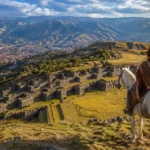
If there is one archaeological site that defines the future of Cusco tourism, it is T’aqrachullo. Located in the district of Suyckutambo, province of Espinar, this pre-Hispanic complex was officially opened to tourism in December 2024 and is already being compared to the great archaeological sites of the southern Andes.
With more than 600 identified structures—of which over 300 have already been restored—T’aqrachullo combines Inca architecture with evidence of Wari and Qolla occupations in a stunning high-Andean setting of reddish canyons, golden plains, and breathtaking views of the Apurímac River unlike anything else on the standard tourist circuit.
What makes it unique is not only its scale but also its current state: it is a large, important, and still peaceful site. You can walk among its funerary chullpas, its section of the Qhapaq Ñan, and its ritual water mirrors without sharing them with hundreds of tourists. That opportunity will not last forever.
- Location: Suyckutambo, Espinar Province, Cusco
- Altitude: Over 4,000 meters (13,123 ft)
- Admission: Free
- Reference Hours: 8:00 AM – 4:00 PM
- How to Get There: 244 km from Cusco via the Cusco–Espinar highway (~5 hours) plus 45 minutes on a dirt road. A 4WD vehicle is recommended.
- Recommended Time: Full day
- Included in Tourist Ticket: No — separate free admission
#2 — Saqsaywaman: The Fortress That Defies Physics
Located just 15 minutes by taxi from Cusco’s Plaza de Armas, Saqsaywaman is the most accessible and impressive archaeological site within the city limits. Its three zigzag terraces are built with limestone blocks weighing more than 100 tons, fitted together without mortar with a precision that still puzzles modern engineers.
The site was the setting of one of the bloodiest battles of the Spanish conquest in 1536, when Manco Inca attempted to retake Cusco from these heights. Today, in addition to its historical significance, it offers the best panoramic views of the city from its upper terraces and serves as the stage for the Inti Raymi, the Festival of the Sun, every June.
- Location: Hills north of Cusco, 15 minutes from downtown
- Altitude: 3,700 meters (12,139 ft)
- Admission: Included in the General Tourist Ticket (130 soles)
- Hours: 7:00 AM – 6:00 PM daily
- How to Get There: Taxi from downtown (~15 soles) or a 45-minute uphill walk through the San Cristóbal neighborhood
- Recommended Time: 1.5 to 2 hours
#3 — Qorikancha: The Temple of the Sun They Could Never Erase
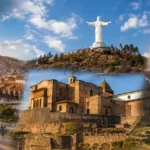
Qorikancha was the most sacred and opulent temple of the Inca Empire. Its walls were covered with sheets of pure gold that reflected sunlight throughout the sanctuary. The Spanish conquistadors melted down all that gold and built the Convent of Santo Domingo on top of it—one of the most important colonial religious buildings in Peru—but the original Inca walls survived. Today, that contrast between two civilizations is the site’s greatest attraction.
Seeing how the perfectly fitted Inca stonework supports and contrasts with the colonial Baroque architecture above it is one of the most powerful experiences in Andean archaeology. The inner garden, featuring replicas of the golden plants described by chroniclers, completes the visit.
- Location: Historic center of Cusco, 5 minutes from Plaza de Armas
- Admission: 20 soles — not included in the Tourist Ticket
- Hours: Monday–Saturday 8:30 AM – 5:30 PM / Sundays from 2:00 PM
- How to Get There: Walking from Plaza de Armas (5 minutes)
- Recommended Time: 1 to 1.5 hours
#4 — Choquequirao: The Machu Picchu Without Tourists
Choquequirao is perhaps the most underrated archaeological site in Peru. Comparable in scale and importance to Machu Picchu, it receives only a fraction of its visitors because the only way to reach it is through a 4- to 5-day round-trip trek from Cachora, in the Apurímac region. There is no train, no bus, and no cable car (although proposals have been discussed).
The result is a site that still preserves the true feeling of discovery. The agricultural terraces decorated with white stone llamas in bas-relief, the main plaza sector, and the structures of the Sunch’u Pata sector at 3,050 meters (10,007 ft) above sea level represent world-class archaeology in a cloud forest landscape that is as impressive as the ruins themselves.
- Location: La Convención Province, Cusco Region
- Altitude: 3,050 meters (10,007 ft)
- Admission: Approximately 50 soles
- How to Get There: 4–5-day trek from Cachora (Apurímac) or Huanipaca. Hiring a local guide is recommended.
- Recommended Time: 4 to 5 days for the full expedition
- Included in Tourist Ticket: No
#5 — Ollantaytambo: The Fortress That Defeated the Spanish
Ollantaytambo is the only place in Peru where the Spanish conquistadors suffered a significant military defeat at the hands of the Inca army in 1537. Today, it is also one of the best-preserved archaeological sites in the Sacred Valley and the departure point for trains heading to Aguas Calientes and Machu Picchu.
Its monumental terraces, the unfinished Temple of the Sun at the top of the fortress, and the Inca residential area that is still inhabited by local families make Ollantaytambo a destination that works on multiple levels: history, architecture, scenery, and contemporary Andean life.
- Location: Sacred Valley, 97 km from Cusco
- Admission: Included in the General Tourist Ticket (130 soles)
- Hours: 7:00 AM – 6:00 PM daily
- How to Get There: Bus or shared van from Cusco terminal (~2 hours, 15–20 soles)
- Recommended Time: 2 to 3 hours at the archaeological site plus time to explore the town
#6 — Pisac: Ruins Above, Market Below
Pisac offers a combination that is difficult to beat: at the bottom of the valley lies one of the largest and most colorful artisan markets in the Andes, while high above the town sits a major Inca archaeological complex featuring agricultural terraces, aqueducts, and one of the largest known Inca cemeteries.
The ruins can be reached by taxi from the town or on foot via a 1.5- to 2-hour uphill hike. From the top, visitors enjoy exceptional views of the Sacred Valley and the Vilcanota River.
- Location: Sacred Valley, 32 km from Cusco
- Ruins Admission: Included in the General Tourist Ticket (130 soles)
- Artisan Market: Free — Tuesdays, Thursdays, and Sundays are the liveliest days
- Ruins Hours: 7:00 AM – 6:00 PM
- How to Get There: Shared van from Cusco (~1 hour, 8–12 soles)
- Recommended Time: Half day (market + ruins)
#7 — Moray: The Agricultural Laboratory of the Empire
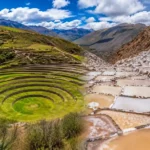
Moray is one of the most mysterious archaeological sites in the entire Andean world. Its four enormous circular depressions with concentric terraces create distinct microclimates between the upper and lower levels, with temperature differences of up to 15°C (27°F). The most widely accepted theory is that it served as a sophisticated experimental center for crop acclimatization.
The perfect geometry of the circles, visible from the upper rim, creates one of the most recognizable photographs in the region. The site is located near the Maras Salt Mines, making it easy to visit both attractions on the same morning.
- Location: Maras District, Sacred Valley, 50 km from Cusco
- Admission: Included in the General Tourist Ticket (130 soles)
- Hours: 7:00 AM – 6:00 PM
- How to Get There: Sacred Valley tour or taxi from the town of Maras (~10 minutes)
- Recommended Time: 1 hour
#8 — Tipón: Peru’s Most Sophisticated Inca Aqueduct
Tipón is one of the hidden gems of the Cusco archaeological circuit, and that is a mistake any admirer of Inca engineering should correct. Its network of canals, fountains, and stone-carved aqueducts still functions more than 500 years later, channeling water with a hydraulic precision that continues to astonish modern engineers.
The site is relatively close to Cusco and receives few visitors even during peak season, allowing for a peaceful and detailed exploration. The agricultural terraces irrigated by the water channels create a landscape of remarkable beauty and geometric order.
- Location: 23 km south of Cusco on the road to Puno
- Admission: Included in the General Tourist Ticket (130 soles)
- Hours: 7:00 AM – 5:30 PM
- How to Get There: Shared van from Belempampa Terminal in Cusco to Oropesa (~30 minutes), then local taxi to the site
- Recommended Time: 1.5 to 2 hours
#9 — Pikillaqta: The Pre-Inca City That Came Before
Pikillaqta is the only major city of the Wari civilization in the Cusco region and one of the largest pre-Inca archaeological sites in southern Peru. Built around 600 AD, several centuries before the rise of the Inca Empire, its orthogonal urban layout—with straight streets, plazas, and specialized compounds—reveals an administrative sophistication that anticipated many features of later Inca urban planning.
Its Quechua name means “City of Fleas,” and although the nickname does not do justice to its grandeur, the site is essential for anyone seeking to understand the broader cultural context that preceded the Inca Empire in this region.
- Location: 30 km south of Cusco on the road to Puno, near Lake Lucre
- Admission: Included in the General Tourist Ticket (130 soles)
- Hours: 7:00 AM – 5:30 PM
- How to Get There: Shared van from Belempampa Terminal in Cusco (~45 minutes, 5–8 soles)
- Recommended Time: 1 to 1.5 hours
#10 — Maukallaqta: The Palace of the God Viracocha
Maukallaqta closes this list as one of the most mythologically significant sites in the region. According to historical chronicles, this complex in the province of Espinar was built by the Inca ruler Viracocha as a replica of the original Cusco, and nearby stood the sanctuary where the god Wiracocha appeared before the Inca prior to the battle against the Chancas.
The site is located relatively close to T’aqrachullo, making it easy to combine both destinations in a single trip to Espinar Province. Because access remains limited, visitors can enjoy a crowd-free experience in a beautiful high-Andean setting.
- Location: Espinar Province, Cusco — near Coporaque
- Altitude: Approximately 3,900 meters (12,795 ft)
- Admission: Free
- How to Get There: From Yauri (capital of Espinar) by private vehicle or local taxi
- Recommended Time: 2 hours
- Pairs Well With: T’aqrachullo (same day or consecutive days)
Summary Table: 10 Archaeological Sites at a Glance
📍 Overview of the 10 Archaeological Sites in Cusco
🟢 Easy: Suitable for most travelers |
🟠 Moderate: Requires significant travel |
🔴 High / Very High: Requires trekking, long-distance travel, or specialized logistics
Frequently Asked Questions About Archaeological Sites in Cusco
What is the largest archaeological site in Cusco?
T’aqrachullo, located in the province of Espinar, is one of the largest archaeological complexes in the region, with more than 600 identified structures. It was officially opened to tourism in December 2024 and represents one of the most important archaeological discoveries in southern Peru in recent years.
Which archaeological sites in Cusco are included in the Tourist Ticket?
The General Tourist Ticket (130 soles) includes: Saqsaywaman, Q’enqo, Puca Pucara, Tambomachay, Pisac, Ollantaytambo, Chinchero, Moray, Tipón, Pikillaqta, and several museums in the historic center.
It does not include Qorikancha (separate admission fee of 20 soles), Machu Picchu (separate entrance ticket), or T’aqrachullo (free admission).
What is the least-visited archaeological site in Cusco?
T’aqrachullo and Maukallaqta, both located in the province of Espinar, are among the least-visited sites due to their distance from the traditional tourist circuit.
Choquequirao also receives very few visitors compared to its size and significance because it can only be reached through a demanding 4- to 5-day trek.
Can several archaeological sites be visited in one day?
Yes. The archaeological sites surrounding Cusco city (Saqsaywaman, Q’enqo, Puca Pucara, and Tambomachay) can easily be visited in a single day by taxi.
The Sacred Valley sites (Pisac, Moray, and Ollantaytambo) are commonly combined into a full-day tour.
T’aqrachullo and Maukallaqta, located in Espinar Province, generally require at least two days due to the travel distance.
Can I visit these sites without a guide?
Yes. All sites included in the Tourist Ticket, as well as Qorikancha, have informational panels and signage that allow for an enjoyable self-guided visit.
For Choquequirao, hiring a guide is strongly recommended due to the difficulty of the trek and the complexity of the archaeological complex.
For T’aqrachullo, a local guide hired in Yauri can greatly enhance the experience, as interpretive infrastructure is still being developed.
Conclusion: Cusco Has Far More to Offer Than You Imagine
Machu Picchu is extraordinary. But if you allow it to be the only archaeological site on your trip to Cusco, you will leave having seen only a fraction of what this region truly offers.
From the hydraulic engineering of Tipón to the geometric circles of Moray, from the undefeated fortress of Ollantaytambo to the prehistoric silence of T’aqrachullo, each of these sites adds another layer of understanding to a civilization that built an empire without the wheel, without writing, and without iron—yet still challenges our ability to explain how it achieved such remarkable feats.
Cusco’s archaeological heritage cannot be fully appreciated in a single day. But with this list, you now have the perfect roadmap to begin exploring it.