Cusco City Tour: A Complete History and Archaeology Guide for the Perfect Morning
Cusco is not simply a city: it is the golden scar of an empire. Every stone in its streets preserves the memory of builders who challenged geography, gravity, and time itself. If you only have one morning to explore it, this itinerary will take you from the colonial heart of Plaza de Armas to the monumental terraces of Saqsaywaman, passing through the Temple of the Sun and the freest panoramic viewpoint you will find over the city: the Cristo Blanco Viewpoint.
This city tour is designed for independent travelers who prefer to move at their own pace, without relying on groups or agencies. You do not need to hire a guide to enjoy it, although a certified guide can completely transform the experience if you are passionate about Inca archaeology.
Why Take a City Tour in Cusco?
Cusco was declared a UNESCO World Heritage Site in 1983. The city is the fascinating result of the overlap between two civilizations: the Inca, who built with a precision and scale that still amazes modern engineers, and the Spanish colonials, who erected churches and palaces directly on top of the foundations of the temples they destroyed.
Walking through Cusco is literally walking on history. The streets of the historic center preserve perfectly assembled Inca stone walls capable of withstanding earthquakes that toppled what the conquistadors built above them. This duality—Inca stone as an unshakable foundation, colonial baroque as a fragile layer—is the most powerful visual metaphor you will take away from this journey.
A morning city tour also offers an important practical advantage: the crowds arrive after 10:00 AM. Starting early allows you to experience Plaza de Armas at its most peaceful, photograph Qorikancha in soft natural light, and reach Saqsaywaman before organized tour groups fill every corner.
See available Cusco travel packages that include the Cusco City Tour.
Itinerary: 5 Essential Stops for Your Cusco City Tour
This route covers approximately 5 hours and can be completed mostly on foot, except for the final stop, for which a short taxi ride is recommended. The route follows a logical geographical and historical order: it begins in the city’s founding square, moves through the most important museums in the historic center, and ends with the most spectacular views of Cusco.
1. Plaza de Armas — 7:30 AM | Free
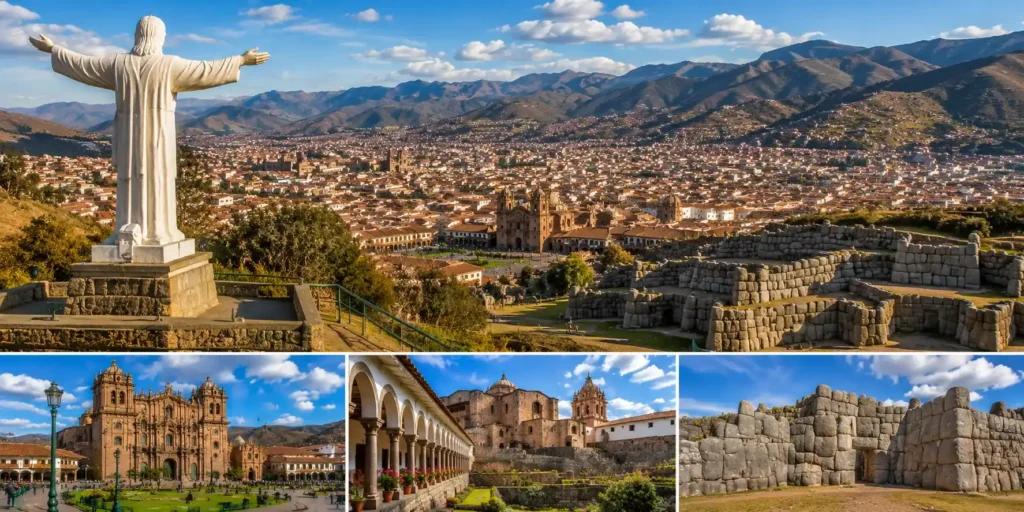
The historical, political, and spiritual epicenter of Cusco. All roads of the Tawantinsuyu once converged here. Today it is flanked by the imposing Cusco Cathedral and the Church of the Society of Jesus, two masterpieces of Andean Baroque architecture built atop former Inca palaces.
Arriving at 7:30 AM allows you to walk beneath the arcades almost alone, watch locals begin their day, and capture photographs without the crowds of tourists who arrive later. The square is open to the public 24 hours a day.
Recommended time: 30 minutes.
2. Inka Museum Cusco — 9:15 AM | 30 Soles
Just a two-minute walk from Plaza de Armas, the Inka Museum houses the world’s largest collection of qeros (ceremonial Inca drinking vessels), as well as mountain mummies preserved in remarkable condition. The museum occupies a 17th-century palace built atop the foundations of Huáscar’s palace.
The artifacts displayed on the upper floor—colonial textiles, gold objects, and ritual items—are by themselves worth the visit.
- Hours: Monday through Saturday. Opens at 9:15 AM on weekdays and 8:45 AM on Saturdays. Closed Sundays.
- Admission: 20 soles (cash payment).
- Recommended time: 1 hour.
3. Qorikancha — 10:30 AM | 20 Soles
The most sacred site of the Inca Empire, dedicated to Inti, the Sun God. Its walls were originally covered with sheets of pure gold. The Spanish stripped the temple of its treasures and built the Convent of Santo Domingo on top of it, but the Inca walls—polished with a precision that leaves no trace of mortar—remain visible and majestic.
The architectural tension between both cultures is palpable in every corner of the complex. It is perhaps the place where the history of the conquest can most clearly be read in stone.
- Hours: Monday through Saturday from 8:30 AM to 5:30 PM. Sundays from 2:00 PM onward.
- Admission: 20 soles. Not included in the Tourist Ticket.
- Recommended time: 90 minutes.
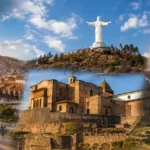
4. Cristo Blanco Viewpoint — 12:00 PM | Free
Most itineraries jump directly from Qorikancha to Saqsaywaman. That is a mistake. The Cristo Blanco Viewpoint, located on Pukamuqu Hill at 11,995 ft (3,656 m), offers something no archaeological site can provide on its own: perspective.
From here you can see Cusco as Inca engineers conceived it: a city designed in the shape of a puma, with Saqsaywaman forming the head and the Huatanay River the tail. The urban fabric stretches in every direction, framed by mountains rising above 13,000 feet. On clear days—most mornings between May and October—the visibility is extraordinary.
The Cristo Blanco statue was donated to the city in 1944 by the Palestinian community living in Cusco. Its location is unmatched, and access is completely free. From here, it is possible to continue on foot to Saqsaywaman in just a few minutes.
- Access: Taxi from Qorikancha (~10 min, 25 soles). Free parking if traveling by car.
- Admission: Free, open 24 hours.
- Recommended time: 30 minutes.
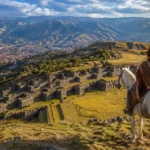
5. Saqsaywaman Ruins— 12:30 PM | Tourist Ticket (130 Soles)
The most impressive archaeological site within the urban perimeter of Cusco. Its three zigzagging terraces are built from limestone blocks weighing over 100 tons, assembled with a precision that still challenges every explanation regarding how they were transported and placed.
The view over the city from above is magnificent, especially when combined with the perspective already gained from Cristo Blanco. The site is also famous for being the stage of Inti Raymi, the Festival of the Sun, celebrated every June 24.
- Hours: 7:00 AM – 6:00 PM daily.
- Admission: Included in the General Tourist Ticket (130 soles), which grants access to 15 archaeological sites.
- Recommended time: 90 minutes.
Practical Information: Prices, Opening Hours, and the Tourist Ticket
Before heading out, it is important to understand the access system for Cusco’s attractions. There are two types of tickets:
- Individual admissions: Qorikancha (20 soles) and the Inka Museum (20 soles) are paid separately and are not included in the Tourist Ticket.
- General Tourist Ticket: 130 soles. Includes Saqsaywaman, Q’enqo, Puca Pucara, Tambomachay, Pisaq, Ollantaytambo, Chinchero, and more. Valid for multiple days.
If your stay in Cusco lasts more than one day and you plan to explore the Sacred Valley, the Tourist Ticket easily pays for itself. It can be purchased at the ticket offices of participating sites or at the Centro Bartolomé de las Casas office in the historic center.
Tips for Enjoying the Cusco City Tour
- Start early (7:00–7:30 AM): Fewer people, better light for photography, and less crowded attractions.
- Carry cash in Peruvian soles: Most sites do not accept credit or debit cards.
- Altitude: Cusco sits at 11,155 ft (3,400 m). Drink coca tea, walk slowly, stay hydrated, and avoid alcohol on your first day.
- Proper footwear: Wear shoes with good traction. The terrain at Saqsaywaman and Cristo Blanco is uneven.
- Taxis: Negotiate the fare before getting in. The Qorikancha–Cristo Blanco route should cost between 12 and 25 soles.
- Weather: The dry season (May–October) is ideal. From November through April, afternoon rain is common; bring a waterproof jacket.
Frequently Asked Questions About the Cusco City Tour
How much does it cost to do the Cusco City Tour on your own?
The approximate cost in Peruvian soles is: Inka Museum (30 soles) + Qorikancha (20 soles) + Cristo Blanco (free) + Tourist Ticket for Saqsaywaman (130 soles) + taxis (~30 soles). Total estimated cost: 200 soles (~50 USD). This is significantly more affordable than a private tour, which typically costs between 80 and 150 USD.
Is it safe to do the Cusco City Tour alone?
Yes. The historic center and the main archaeological sites are safe for solo travelers, especially during the morning hours. It is recommended to keep valuables secure, use official taxis or apps such as InDriver, and stay within established tourist routes.
When is the best time to visit Cusco?
The dry season (May through October) is ideal: clear skies, little to no rain, and pleasant daytime temperatures (59–68°F / 15–20°C). June and July are the busiest months. April and October offer excellent weather with fewer tourists.
Can I do the tour without acclimatizing first?
It is not recommended to do this tour on your first day after arriving. Most travelers need between 24 and 48 hours to acclimatize to Cusco’s elevation of 11,155 ft (3,400 m). Symptoms of altitude sickness may include headaches, dizziness, and fatigue. Resting and staying well hydrated on your first day will make the tour much more enjoyable.
What is included in the Cusco Tourist Ticket?
The General Tourist Ticket (130 soles) grants access to 15 sites, including Saqsaywaman, Q’enqo, Puca Pucara, Tambomachay, Pisaq, Ollantaytambo, Chinchero, and several museums in the city center. Important: Qorikancha and the Inka Museum require separate admission and are not included.
Conclusion: A Morning Worth an Empire
This itinerary condenses centuries of history into just a few hours of walking. What begins in Plaza de Armas—that visible tension between Inca stonework and colonial architecture—becomes fully understandable when you arrive at Qorikancha, where you can see how one culture attempted to erase another and never completely succeeded. And what the Inka Museum explains through words and artifacts, Saqsaywaman proclaims through stone.
The Cristo Blanco Viewpoint, often overlooked in favor of the archaeological sites, adds a dimension that none of the others can provide: perspective. Seeing Cusco from above, understanding its human scale within the Andean landscape, is the moment when the city stops being a catalog of ruins and becomes a complete experience.
Cusco demands more from your lungs than you may be accustomed to. It will ask you to slow down, breathe deeply, and pause. Listen to it. The best things in this city are not rushed—they are walked.