The Andean Condor in Colca Canyon 2026 — When to See It, Where, and at What Time
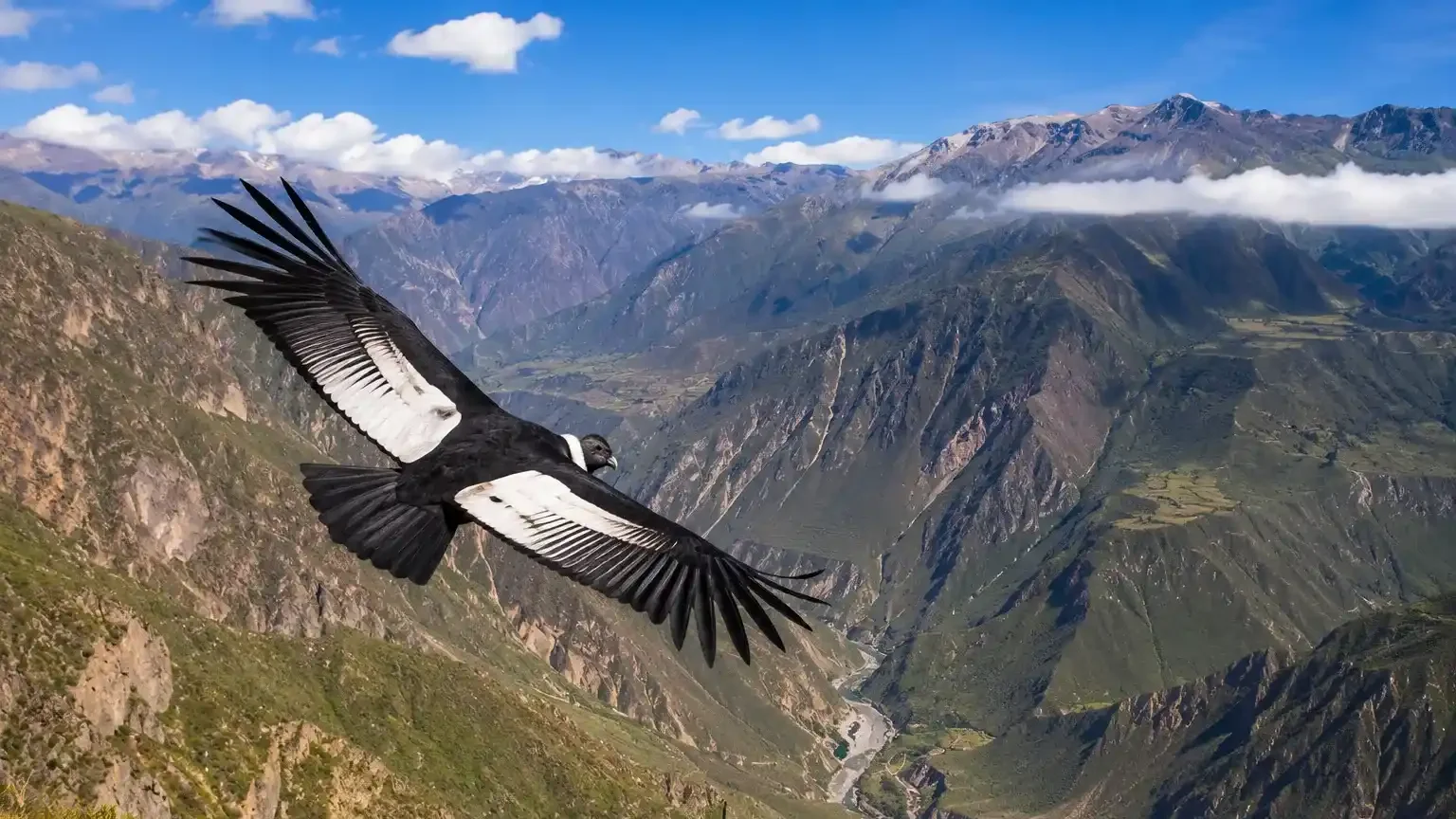
Seeing the Andean condor soaring freely above Colca Canyon is one of the most breathtaking wildlife experiences in all of South America. The largest flying bird on Earth — with a wingspan of up to 10.5 feet (3.2 meters) — glides effortlessly over the canyon using rising thermal currents, sometimes passing less than 30 feet (10 meters) from visitors standing at the viewpoints.
But there’s a catch: if you arrive at the wrong time, you may not see a single condor. This guide explains exactly when to go, what time to be at the viewpoint, and which factors determine whether you’ll see dozens of condors or none at all.
The Andean Condor — What It Is and Why It’s So Special
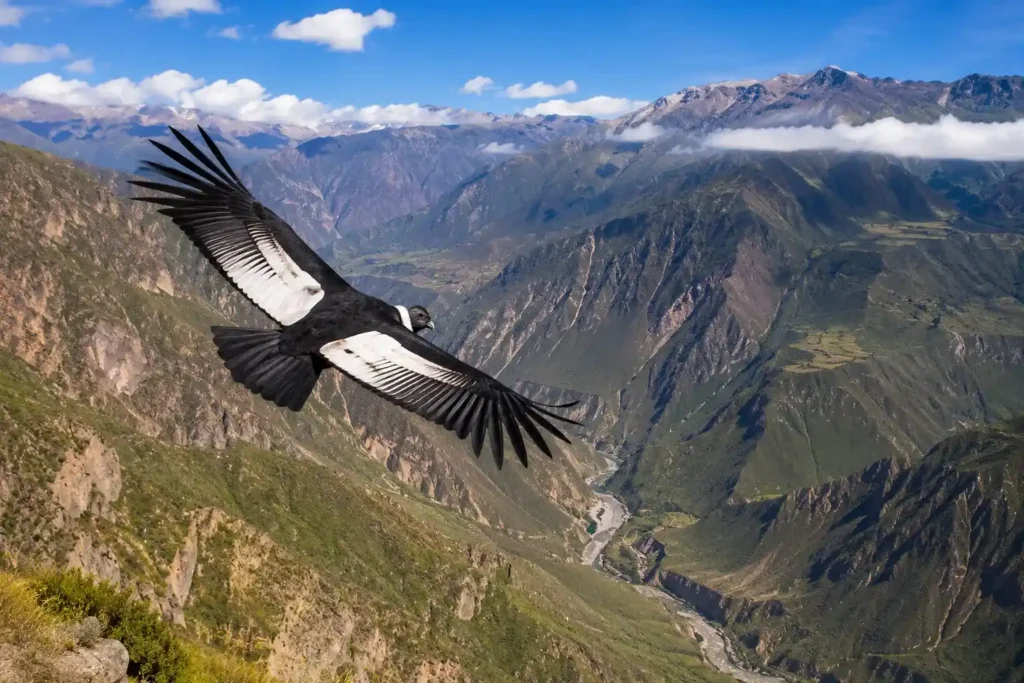
The Andean condor (Vultur gryphus) is no ordinary bird:
- 🦅 It is the largest flying bird in the world — with a wingspan of up to 10.5 feet (3.2 m) and weighing as much as 33 lbs (15 kg)
- ⏳ It is one of the longest-living birds on the planet — capable of living more than 70 years in the wild
- 🌎 It exists only along the Andes Mountain Range of South America
- 🔴 It is classified as a vulnerable species by the IUCN — with fewer than 10,000 individuals remaining worldwide
- ✈️ It rarely flaps its wings — using thermal currents to travel up to 125 miles (200 km) in a single day without expending much energy
For Andean cultures, the condor is the most sacred creature of all — the Apu of the skies, the messenger between the human and divine worlds. Seeing it in Colca is not just a visual experience — it is a moment filled with centuries of cultural significance.
Why Colca Canyon Is the Best Place in the World to See Condors
Colca Canyon offers a unique combination of factors that make it the most extraordinary condor-viewing destination on the planet:
- Thermal currents: the temperature difference between the canyon floor and its upper rims creates powerful updrafts. Condors use them as natural elevators, allowing them to rise effortlessly.
- The canyon’s geometry: the steep canyon walls funnel the air currents directly toward the viewpoints, causing condors to fly right in front of visitors rather than far away.
- Abundant food sources: livestock and native wildlife in the valley provide a reliable food supply, encouraging condors to return regularly.
- Relatively low disturbance: Colca is less crowded than many wildlife destinations, allowing condors to maintain their natural flight patterns.
The Best Time to See Condors at Cruz del Cóndor
This is the most important piece of information in this guide: arriving late at the viewpoint is the most common mistake travelers make—and the biggest reason for disappointment.
⚠️ The Reality of One-Day Tours: Most day tours from Arequipa arrive at Cruz del Cóndor around 8:00–9:00 AM, when condors are already flying much higher. If you want close encounters and the best photography conditions, a 2-day Colca Canyon tour with sunrise departure to the viewpoint is the only way to truly maximize your chances.
The Best Time of Year to See Condors
| Season | Sighting Probability | Conditions |
|---|---|---|
| May–August (Dry Season) | Very High — 90%+ | Clear skies, highly active condors, strong thermal currents |
| September–November | High — 80%+ | Good conditions, beginning of occasional rainfall |
| December–February (Rainy Season) | Moderate — 60% | Some condors migrate, clouds may obscure the canyon |
| March–April | Moderately High — 70% | Rainfall decreases, condors return to the area |
The Breeding Season — The Most Special Time
Between November and March, the Andean condor enters its breeding season. Males perform spectacular courtship displays in front of females — featuring dramatic dives and spiraling ascents. If you see two condors circling closely together, you are probably witnessing a mating ritual. It’s an incredible sight, even though overall sighting rates may be slightly lower during this period.
Cruz del Cóndor vs Other Viewpoints — Which One Should You Choose?
Cruz del Cóndor (10,784 ft / 3,287 m) is the official and most visited viewpoint, but there are other excellent places to watch condors as well:
- 🔭 Cruz del Cóndor: the most accessible viewpoint, with dedicated viewing platforms and the highest statistical probability of sightings. Included in all tours. The benchmark location.
- 🔭 Choquetico Viewpoint: less known, about a 20-minute walk from Cruz del Cóndor. No crowds and a different perspective of the canyon.
- 🔭 Achachiwa: a higher viewpoint (11,483 ft / 3,500 m), requiring a 45-minute hike from Cruz del Cóndor. Perfect for travelers seeking solitude and panoramic views.
Tips for Photographing the Andean Condor
- 📷 Telephoto lens: at least 200mm for sharp images when condors are flying high. A 300–400mm lens produces exceptional results from the viewpoint.
- ⚡ Fast shutter speed: at least 1/1000s to freeze wing movement during the few moments when condors flap.
- 🌅 Early morning light: sunrise creates a golden glow on the condor’s feathers that cannot be replicated at midday.
- 🔋 Extra batteries: cold morning temperatures drain batteries quickly—bring at least two.
- 🧘 Patience: condors do not always appear immediately. Stay at the viewpoint for at least 45–60 minutes.
Want to See Condors Up Close?
2-Day Colca Canyon Tour — Sunrise Departure to Cruz del Cóndor · From $80 USD
1-Day Tour Also Available · Daily Departures from Arequipa