Ausangate Trek 2027 — Complete Guide: Route, Difficulty, Altitude & Everything You Need to Know
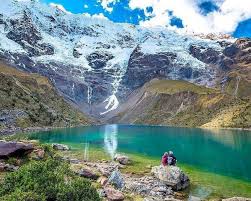
The Ausangate Trek is, without question, the wildest, most demanding, and most spectacular multi-day hike in the Cusco region — and also one of the least known among travelers who arrive thinking only of the Inca Trail or Salkantay. 5 days circling the sacred Ausangate peak — the 20,945 ft (6,384m) mountain considered the guardian Apu of southern Peru — with high-altitude passes above 17,060 ft (5,200m), lakes of turquoise, green, and red, living glaciers, and remote Quechua communities that see very few outsiders.
This is not a trek for beginners. But for those looking for pure adventure, uncrowded wilderness, and a genuine connection with the Andes, the Ausangate is the definitive Cusco experience.
What Is the Ausangate and Why Is It Sacred?
The Ausangate glacier peak — or Apu Ausangate in Quechua — rises to 20,945 ft (6,384m) in the Vilcanota mountain range, about 62 miles (100 km) southeast of Cusco. It’s the fifth highest peak in Peru and, for the Quechua communities of the southern Andes, one of the most powerful beings in the universe — not a mountain, but an Apu, a living deity that protects surrounding communities, guards the glacier’s water, and governs the weather of the territory.
Every year in May or June, tens of thousands of pilgrims from across the region walk for days to reach the Qoyllur Riti sanctuary — the sacred ice festival, one of the largest pilgrimages in South America — at the foot of the Ausangate. Watching those processions at night, with candles and traditional dancers in costume on the snow, is one of the most extraordinary human spectacles on the continent.
The Ausangate Trek Route — 5 Days
The classic Ausangate Trek takes 5 days and 4 nights in camping. Most of the trail runs above 13,100 ft (4,000m), crossing several mountain passes above 16,400 ft (5,000m). The full circuit covers approximately 43 miles (70 km) around the massif.
Day 1 — Cusco → Tinki → Upis Hot Springs
Very early departure from Cusco (~5:00 AM) toward the village of Tinki at 12,467 ft (3,800m) — about 3 hours by road southeast of Cusco. After lunch in Tinki, the hike begins ascending toward the Upis Hot Springs at 14,436 ft (4,400m) — the trek’s first campsite. The natural thermal pools at Upis, with a direct view of the Ausangate glacier, are a welcome reward at the end of Day 1.
⏱️ Hiking Day 1: ~3–4 hours · 📍 Camp: Upis 14,436 ft (4,400m)
Day 2 — Upis → Arapa Pass → Pucacocha Lake
The first high-altitude pass: Arapa Pass at 16,733 ft (5,100m). From the summit, a full panoramic view of the Ausangate massif with its hanging glaciers. Descent to Lake Pucacocha — a red-tinted lake colored by mineral deposits in the subsoil, one of the trek’s most surreal landscapes. Camp beside the lake.
⏱️ Hiking Day 2: ~6–7 hours · 📍 Camp: Pucacocha 15,748 ft (4,800m)
Day 3 — Pucacocha → Palomani Pass → Ausangate Lake
The most demanding and most spectacular day of the trek: Palomani Pass at 17,060 ft (5,200m) — the highest point of the entire route. From the summit, you can see the full Ausangate massif, the Red Valley, and on clear days even the Rainbow Mountain (Vinicunca). Descent to Ausangate Lake — a deep turquoise body of water and probably the most photographed view of the entire circuit.
⏱️ Hiking Day 3: ~7–8 hours · 📍 Camp: Ausangate Lake 15,092 ft (4,600m)
Day 4 — Ausangate Lake → Qampa Pass → Pacchanta
The final high-altitude pass: Qampa Pass at 16,404 ft (5,000m), with sweeping views over Lake Qoma Qocha. Descent to the village of Pacchanta, where a well-earned reward awaits: the natural hot springs of Pacchanta — thermal pools with the Ausangate as your backdrop, the most-appreciated rest stop of the circuit.
⏱️ Hiking Day 4: ~6–7 hours · 📍 Camp: Pacchanta 14,272 ft (4,350m)
Day 5 — Pacchanta → Tinki → Cusco
The closing day — shorter and more relaxed. Downhill hike back to Tinki (3–4 hours), with time to explore the village before the vehicle transfer back to Cusco.
⏱️ Hiking Day 5: ~3–4 hours · 📍 Return: Cusco
Altitude & Passes Summary
| Point | Altitude | Type |
|---|---|---|
| Cusco (departure point) | 11,152 ft / 3,400m | Base city |
| Tinki (trek start) | 12,467 ft / 3,800m | Village |
| Upis Hot Springs | 14,436 ft / 4,400m | Day 1 camp |
| Arapa Pass | 16,733 ft / 5,100m | Day 2 pass |
| Lake Pucacocha | 15,748 ft / 4,800m | Day 2 camp |
| Palomani Pass — highest point | 17,060 ft / 5,200m | Day 3 pass |
| Ausangate Lake | 15,092 ft / 4,600m | Day 3 camp |
| Qampa Pass | 16,404 ft / 5,000m | Day 4 pass |
| Pacchanta hot springs | 14,272 ft / 4,350m | Day 4 camp |
Difficulty of the Ausangate Trek
The Ausangate Trek is rated high difficulty — the most demanding of the main multi-day treks in the Cusco region, harder than routes like Lares or a standard Salkantay, primarily because of the constant altitude and the high mountain passes.
What makes it demanding is not technical — it requires no climbing equipment or mountaineering experience. The challenges are:
- 🏔️ Constant altitude: the entire route runs between 12,467 ft and 17,060 ft — there are no descents to lower elevation for recovery
- ❄️ Extreme nighttime temperatures: camping temperatures can drop below 14°F (-10°C), even in dry season
- 💨 Wind and exposure: the mountain passes are fully exposed to Andean winds
- 📏 Distance: 6–9 miles (10–15 km) daily with significant elevation gain and loss over 5 consecutive days
The Ausangate Trek is not ideal for complete beginners, especially those without prior experience in multi-day or high-altitude hiking. A well-prepared first-timer with good fitness and proper acclimatization in Cusco can complete it — but shorter routes are recommended before attempting the full circuit.
Ausangate vs Inca Trail vs Salkantay
| Factor | Ausangate | Inca Trail | Salkantay |
|---|---|---|---|
| Duration | 5 days | 4 days | 5 days |
| Maximum altitude | 17,060 ft / 5,200m | 13,828 ft / 4,215m | 15,223 ft / 4,638m |
| Difficulty | High | Moderate-high | Moderate-high |
| Permit required | No | Yes (limited quota) | No |
| Crowds | Very low | High | Medium |
| Arrives at Machu Picchu | Not directly | Yes (Sun Gate) | Yes (Aguas Calientes) |
| Landscape | Glaciers, colorful lakes, wilderness | Archaeological, historical | Mixed — snowcaps and cloud forest |
| Approx. price | $450–650 USD | $700–1,000 USD | $350–550 USD |
👉 Full comparison: Salkantay vs Inca Trail →
Combining Ausangate with Rainbow Mountain
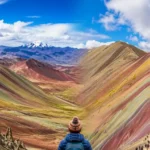
One of the most popular options in recent years is combining the Ausangate Trek with Rainbow Mountain (Vinicunca) in a single itinerary — since Rainbow Mountain is geographically part of the Ausangate massif. The most common approach is to complete the 5-day Ausangate circuit and add Rainbow Mountain as a final day before returning to Cusco, covering the entire Vilcanota mountain range landscape in one expedition.
This combination is particularly rewarding because, after 5 days at altitude and a full acclimatization to the conditions, the Rainbow Mountain hike on Day 6 feels far more manageable than it would as a standalone day trip from Cusco.
👉 Rainbow Mountain vs Palccoyo — which is better? →
What’s Included in the Aremika Ausangate Trek
- 🚐 Round-trip transport from Cusco (Cusco → Tinki → Cusco)
- 🏕️ Full camping equipment (tents, high-altitude sleeping bags, sleeping mats)
- 🍽️ All meals during the trek (breakfast, lunch, and dinner at camp)
- 🐴 Horses and horsemen to carry equipment and supplies
- 🧭 Certified professional bilingual guide (Spanish/English)
- 👨🍳 Cook experienced in high-altitude cooking
- 🩺 Emergency oxygen and first aid kit
- 💰 Approximate price: from $450–650 USD per person (shared group)
What to Pack for the Ausangate Trek
- 🧥 Sleeping bag rated to 14°F (-10°C) or below — non-negotiable, nights are extreme
- 🧤 Gloves, beanie, buff, and thermal base layers — the difference between a comfortable and a miserable night
- 🥾 Waterproof trekking boots that are already broken in — never wear new boots on the Ausangate
- ☀️ SPF 50+ sunscreen and UV-filter sunglasses — radiation at 17,000 ft is severe even through cloud cover
- 💊 Acetazolamide (Diamox) or sorojchi pills — consult your doctor before the trek if you have a history of altitude sickness
- 🎒 20–25 liter daypack for hiking (heavy gear travels by horse)
- 💵 Cash in soles for tips to porters and cook, and for purchases in trail villages
Best Time for the Ausangate Trek
| Season | Conditions | Recommendation |
|---|---|---|
| May–August | Clear skies, very cold nights (-10 to -15°C), firm trails | ⭐⭐⭐⭐⭐ Best season |
| September–October | Good conditions, occasional early rains | ⭐⭐⭐⭐ Very good |
| November–April | Rainy season — slippery trails, frequent cloud cover | ⭐⭐ Not recommended |
⚠️ Important: unlike the Inca Trail, the Ausangate has no government permit system or daily quotas — but it should always be done with a guide agency experienced in high-altitude expeditions. Solo trekking on the Ausangate without a local guide is not recommended given the remote terrain and weather conditions.
Frequently Asked Questions
Does the Ausangate Trek require a special permit?
No — unlike the Inca Trail, the Ausangate has no government permit system or daily quotas. However, the route’s remoteness and extreme conditions make it essential to use an authorized agency with high-altitude experience.
Can I reach Machu Picchu on the Ausangate Trek?
Not directly. The Ausangate is a circuit that circles the massif — it doesn’t end at Machu Picchu. If you want to combine both, the most common approach is to add a Machu Picchu 1-day train tour before or after the trek.
How many acclimatization days do I need in Cusco before starting?
A minimum of 2–3 nights in Cusco before starting the trek — and we recommend including at least one mid-altitude hike (Humantay Lake, Sacred Valley) to prepare your body. The Ausangate starts at 12,467 ft and ascends quickly.
Can the Ausangate be done in fewer than 5 days?
Shorter 3–4 day versions exist that skip some passes or start from a different point. However, the full 5-day circuit — circling the entire massif and crossing all the passes — is the complete experience. Shorter versions are more accessible but significantly less immersive.
Is the Ausangate Trek harder than the Inca Trail?
Yes, significantly — mainly due to higher sustained altitude. The Inca Trail’s highest point is 13,828 ft (4,215m); the Ausangate stays above 12,467 ft (3,800m) for the entire route and reaches 17,060 ft (5,200m) at its highest pass. The Ausangate also lacks the archaeological and historical narrative of the Inca Trail — it’s a pure wilderness experience.
Ready for the Ausangate Trek?
5 days · High mountain from 12,467 ft to 17,060 ft · Full camping · Guide and cook included
Regular departures from Cusco · Shared or private group · Also available combined with Rainbow Mountain